top of page
GORDON MACIVOR
WWW.GORDONMACIVOR.CO.UK
WILDLIFE, NATURE & THE NATURAL WORLD
Although I am as far from a professional photographer as you can get, I enjoy trying to capture moments that encapsulate some of the wildlife, nature and scenery I have encountered during my travels. My true passion was always to be a wildlife photographer. But unfortunately, life took me elsewhere. This has left me to be less than an amateur photographer. None the less, I try to encapsulate the things I see in the best way possible. It soon made me realise that wildlife photography wasn't just about taking good photos of wildlife. It is about a painstaking hour, day or week to try and gain an image of your target creature in the best moment you can.
I maybe sometimes see life in a different way. Yes, i'm maybe not a good photographer, but I try. Yes, I maybe don't know as much about our planet as many people do, but I care. I feel the main point is, that whatever your passion, whatever your dreams, whatever your goals are in life, you should try to achieve them in the best way you can. If it brings you happiness, then I believe you have acheived your goal.
WILDLIFE
The Puffin: Has got to be one of the cutest and most interesting birds to be found in the British Isles. I took these pictures on a small island called the Brough of Birsay in the Orkney Islands. Although some people are lucky enough to be able to photograph them somewhere a little more welcoming. I had to find myself hanging over the cliffs of the Brough to try and capture a few prime shots. Definitely worth it though. Puffins tend to arrive in the UK from late March and stay to breed in their nesting sights until around August. From September until the following March they will stay out at sea in the Atlantic Ocean or North Sea. The average lifespan of a Puffin is around 20 years. Puffins are socially monogamous and generally mate for life. Atlantic Puffin populations are decreasing across many regions, notably in the UK where numbers have fallen roughly 25% since 2000. Rising sea temperatures driven by climate change disrupt the popualtion of sand eels & small fish that Puffins rely on to feed their chicks.


The Brough of Birsay
Whether you are looking to take a photo of a Sheep, a Rabbit or a Toucan in the Amazon jungle. It's not as straight forward or as easy as you might think. The UK is filled with rabbits. But just take a moment and think "How easy is it". Well, I can tell you first hand it's not a walk in the park. Rabbits see you coming and don't respond to "Say Cheese". Getting a photo of a Rabbit took me hours. However a Toucan was a piece of cake. Such a good looking and interesting bird. When a Toucan sees you, it knows how beautiful it is and basically asks you to take its photo. Although my photography skill levels are low, for me, it's what I call 'The Chase'. I have thousands of sheep in my local area. I could take photos of sheep all day long, but, it is about getting that 'ONE' photo.


The Mute Swan is a species of swan and native to much of Europe and parts of Asia and the far north of Africa. There are six living species of true swans in the genus Cygnus. Swans usually mate for life.


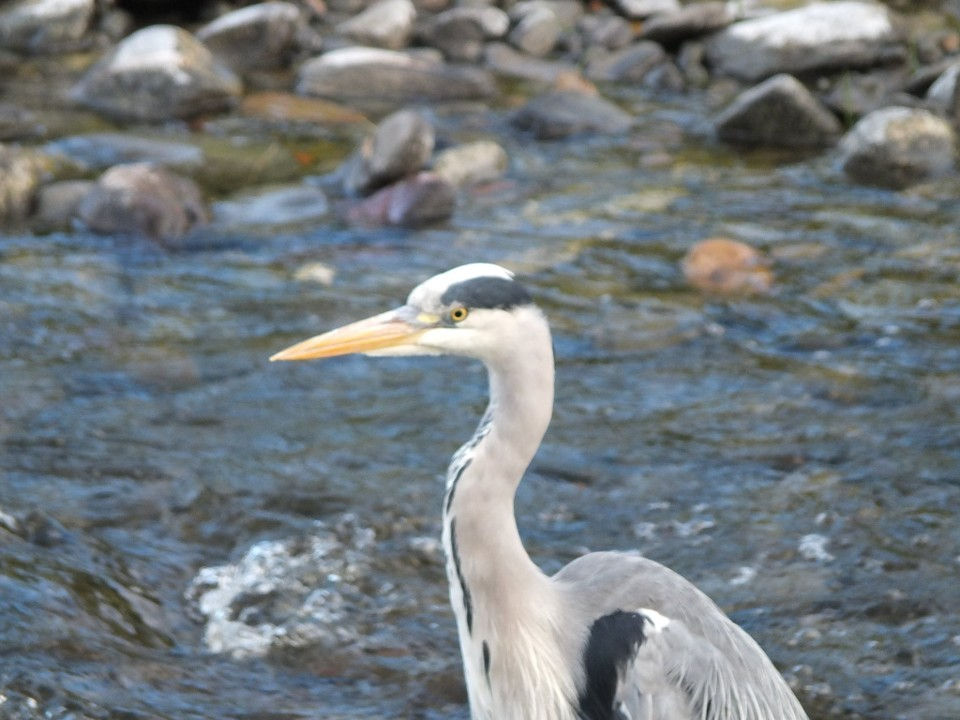
The Grey Heron
The Grey Heron has got to be one of my favourite birds found in the UK. They are resident all year round in the UK and can be found near rivers, ponds & the sea. Basically any food opportunity available to the Grey Heron and you are likely to come across one as they are abundant throughout the land. They will feed on small fish, frogs, small mammals and even other small birds. They will stand completely still in water or on branches waiting to swoop on their prey with stealth and speed. The average lifespan of the Grey Heron in the wild is around 5 years. Many may not survive past the first year due to harsh weather, food scarcity or predators. In the right environment they can live a lot longer.
Due to Global Warming and rising temperatures more Grey Herons now stay in the north insted of migrating south for the winter, as they can reliably find open water and food.
These are just a handful of pictures I managed to grab of this elegant bird during days out on the hunt for some UK wildlife.



The Grey Squirrel
Finally. After weeks of trying to capture the Grey Squirrel, I got my opportune moment. Just before it leaped off to its next shy retreat. Nuts, acorns & seeds are the main foods of choice for the Grey Squirrel which they will collect and bury, ready for winter. Grey Squirrels have been known to pretend to bury nuts in a bid to fool other squirrels that may be watching.
Lupin Pollination
Lupins have a special flower shape where the reproductive parts are hidden inside a closed, protective structure called a keel. When a heavy bee lands on the lower petals, its weight pushes the petals down like a trapdoor. This action releases pollen from the keel onto the bee's belly or abdomen, which the bee then carries to the next flower.
The Mallard Duck
The Mallard is native to the UK, and are our most common and widespread duck. While many Mallards live in the UK all year round, numbers increase in the winter when migrant birds arrive from places like Iceland and Northern Europe.


THE NATURAL WORLD
Throughout my lifetime, I have taken on many adventures. The planet is shrinking as population is growing and the opportunity of adventure is getting less. However, there are still many places around the world that you can gain what I would call 'True Adventure'. This is adventure that takes you away from normality and takes you outside your own comfort zone. When you step outside your own comfort zone you are then on a true adventure.
By the year 2050, scientists warn that climate shifts and habitat loss could put a major fraction of Earth's plants & animals at high risk of extinction. Severe droughts, heavy floods, and immense heatwaves will grow much more common. Rising waters will threaten low-lying coastal cities and island nations. Higher ocean temperatures may destroy up to 90% of warm water coral reefs. The natural world is changing and we are totally dependent on our world. It provides our food, water and air.
The Andes: The Andes are the longest continental mountain range in the world. Stretching over 7000 kilometres along the western edge of South America. They run through 7 countries: Venezuala, Colombia, Ecuador, Peru, Bolivia, Chile & Argentina. Yet during my time trekking in the (Ecuadorial) Andes, I have selected two of my favourite photos taken. Around one kilometre of the 7000km available to me. Although I believe my home country of Scotland has some of the most beautiful and diverse scenery, I can only say that The Andes pip them to the post when it comes to breathtaking vista. A couple of my favourite photos taken and myself taking a moment to let it all soak in. Memories I will never forget. Tropical glaciers in the Andes are thinning by an average of 0.7 metres a year. About 35% faster than the global average. Glaciers have lost up to 50% of their mass since the 1970's and are at their smallest size in over 11,000 years.


The Himalayas: There are 14 mountains on earth that are over 8000 metres. 10 of these are found in the Himalayas, Including Mount Everest. Many people have attempted the higheast peak with many failed attempts. Just a small handful of some of my pictures of which I can only say are 'Awe Inspring' when stood among the giants. Having personally been over 27000 feet up Everest, I consider myself honored that I am a small percentage of the population to have had this opportunity in life. When you are stood among the giants you quickly realise how small you are in the grand scale of life itself. Himalayan glaciers are melting at least twice as fast as they did before 2000. losing 1000's of square kilometres of ice cover. Rising temperatures destablize permafrost and steep mountain slopes, triggering dangerous rock avalanches and landslides.


The Amazon Jungle: Another adventure I took myself on. I knew where the Amazon was. I knew where Edinburgh Airport was. So, all I had to do was pack my rucksack and get a flight to South America. The rest was a doddle from there. No holiday companies, no set tours. Just up and at it until you reach where you want to be. I have taken many photos during my trek in the Amazon, but, as you can imagine, a photo of the forest soon becomes similar to every other photo of a forest you can take. Just a couple of reminders of how awesome it is to be in what can be a somewhat unforgiven environment. Even the trees want to do you harm if you're not careful. Possibly one of the scariest moments in my life was taking a dip in a jungle river, not knowing what lies beneath. Humans have destroyed around 20% of the jungle. Scientists warn that losing 20% to 25% of forest could trigger a permanent shift into a dry savannah. Trees cycle massive amounts of moisture. Fewer trees means less rain, drying rivers and dying wildlife.


Finlands Arctic Circle: Having never travelled to Finland before, I wanted to find out first hand what the natural beauty of this country could offer me. I had to head for the Arctic Circle region of Finland to see the countrys real beauty. Again, another flight from Edinburgh with just me and my rucksack to find out what would be one of the most stunning places I think I have experienced during my travels. Putting the minus temperatures to one side, Finland did not disappoint. A winter wonderland. Every landscape and every tree created its own piece of art. I recall many a moment just standing, taking it all in, and feeling the true natural world around me. Global warming is warming northern Finland at roughly twice the global average. Milder winters bring rain instead of snow. When the rain refreezes it forms an impenetrable ice layer over the ground blocking Reindeer from reaching their primary food source lichen.


The Cuillin Ridge: The Cuillin Ridge on the Isle of Skye in Scotland is the most challenging and iconic rock scrambling & mountaineering journey in the United Kingdom. The ridge is around 8 miles long from Gars-Bheinn to Sgurr nan Gillean. The highest point on the ridge being Sgurr Alasdair which is also the highest point on Skye. It is continuous Grade III scrambling with mandatory rock climbing pitches up to Severe Grade. A couple of photographs taken during my time on the ridge. The first Photo shows the true magniitude of the challenge ahead. Having spent the night on the ridge and waking up to the ridge peaks poking through the mist and low cloud was yet another moment of Awe. The stunning beauty of nature takes you to a different place in life and opens up the bigger picture. The 9.00 to 5.00 job is the last thing on your mind.


Iceland: The land of Ice & Fire. Iceland sits on the Mid-Atlantic Ridge with over 130 volcanoes and extensive ice fields like Vatnajokull, Europes largest glacier. Iceland is possibly the closest you can get to still being a true wilderness. 64% of the population live in and around the capital Reykjavik. The natural surroundings when trekking in Iceland are very similar to many places in Scotland. the only difference being is no one is around and you have the feeling of true solitude. When travelling solo through its interior, you can't help but think that you are the only person on the planet and this is how it would have been 1000's of years ago. Iceland loses billions of tonnes of ice each year, thinning glaciers by about 1 metre annually. Reduced weight from melting ice changes stress on underground magma chambers, which can influence volcanic and seismic activity.


Operation Desert Storm: As a young man I served my time in the British Army. The army gave me so much opportunity to see and travel the world. There were many opportunities to split from the base and take active roles in doing something different than everyday duties. For a few years I would be a permanent member of staff in one of our ski huts in Bavaria. New recruits and students from UK universities would come to our hut for a week of skiing activy. It was our job to ensure they were fed, entertained and made it to the slopes on time. The Army gave me more of an insight to adventure. It gave me the confidence to realise that I didn't need anyone else to rely on. I could create my own adventure. Coming towards the end of my Army career I found myself entangled in the first Gulf War. As a young man, this was an adventure in itself. I believe that this is probably the main reason I am a great believer in charity. Experiencing some of the horrors in the world first hand and realising the cruelty we can bestow onto others. There are so many wrongs in the world and so many people that need help. Without charitable support or without someone that cares, these people will suffer through no fault of their own. Our current world is being torn apart by conflict. Whether it be war or conflict between groups of people.


bottom of page